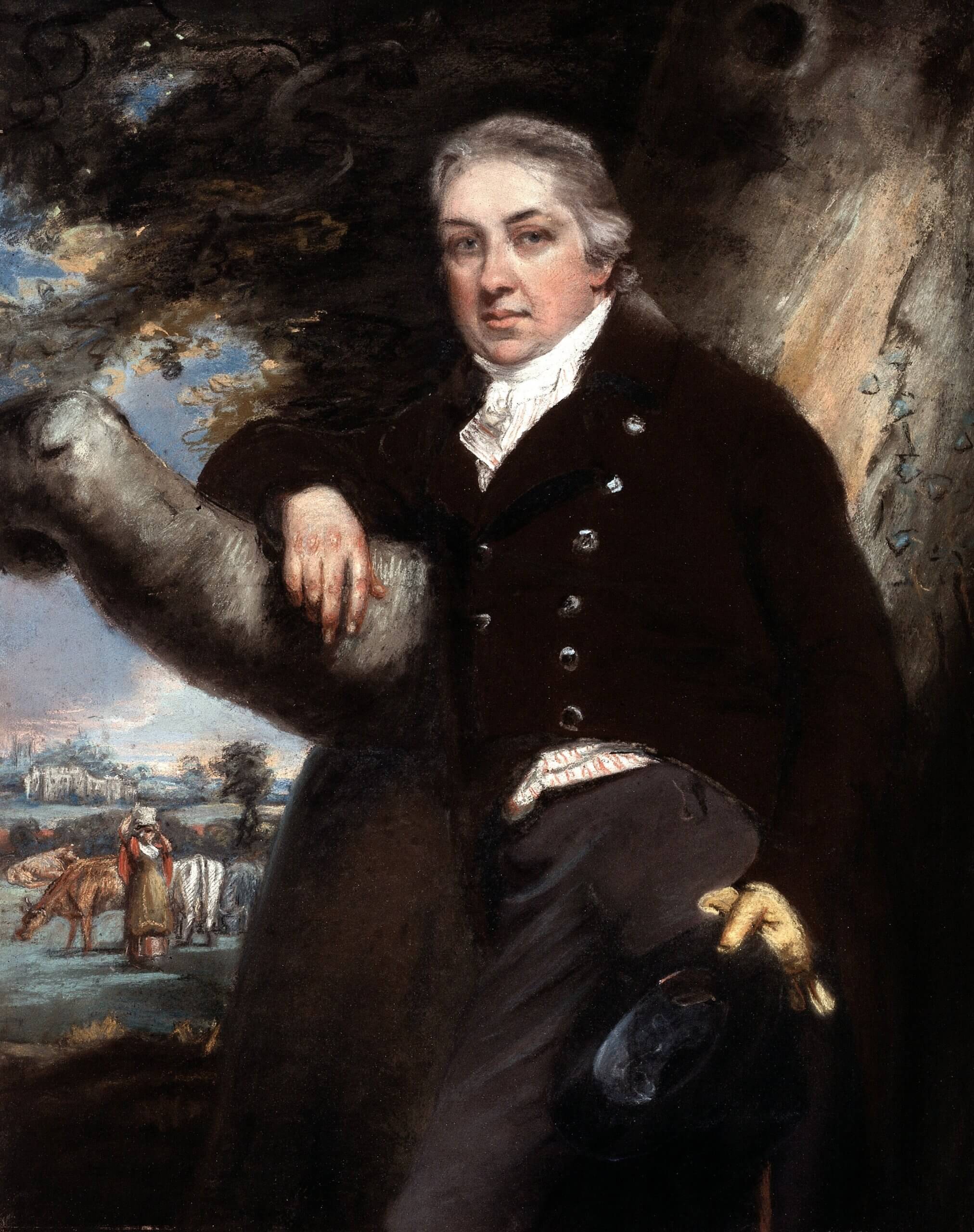
Edward Jenner was a scientist who created the smallpox vaccine. He was born on the 17th May 1749 and died on the 26th January 1823, at the age of 73.
Childhood
When he was 13, he was inoculated with smallpox. This affected Edward’s health for the rest of his life. At the time, people deliberately caught smallpox to gain immunity from it.
Smallpox vaccine
In the 18th century, smallpox was a deadly disease. It caused blisters to form on your skin and in some case even blindness. You had a 30% chance of dying from it.
In 1768, an English doctor realised that by exposing someone to cowpox, you made them immune to smallpox. He thought that the protection from smallpox was because of the pus that came out of the blisters of infected cows.
On the 14th May 1796, he tested this theory by infecting James Phipps, his gardeners’ son, using cowpox blisters from Sarah Nelmes. She was a milkmaid who had caught cowpox. Edward rubbed the pus into small cuts James had on his arm. Despite having a fever and feeling dizzy, he wasn’t infected with the disease.
In July 1796, Edward inoculated James with smallpox to see if he would catch smallpox, but there wasn’t any sign that James had been infected. Edward repeated this many times, but James still didn’t come down with smallpox.
After testing this theory with 23 other people, he wrote up what he found in a report, which he then presented to the Royal Society.
Legacy
Medical scientists eventually accepted Edward’s report, and after lots of campaigning by his colleagues and King George III, Parliament gave him £10,000 as a reward for his work. He was also awarded £20,000 from the Royal College of Physicians.
The Balmis Expedition, which lasted three years, involved sending ships to the Phillipines, America and China to spread the word about the smallpox vaccine.
Napoleon, the Emperor of France, was at war with Britain at the time. But he had all his soldiers vaccinated against smallpox, and awarded Edward Jenner a medal.