The Vikings were warriors, who occupied most of Western Europe in the 9th and 10th centuries. They invaded England in 865 AD and had taken over nearly all of it in 13 years. Vikings are known for their weapons and wooden ships.
Invasion of England
The Vikings invaded England in 865 AD. By 878 AD, 13 years later, they had conquered all of England.
However, King Alfred’s army defeated the Vikings in a battle in Wessex. But that didn’t stop them from taking the rest of England over.
King Alfred and the Vikings came to an agreement where the Anglo-Saxons, who lived in England at the time, could live the west of England, and the Vikings could have the east.
Viking armour
When Vikings went into battle, they protected themselves with wooden shields and covered themselves in heavy armour.
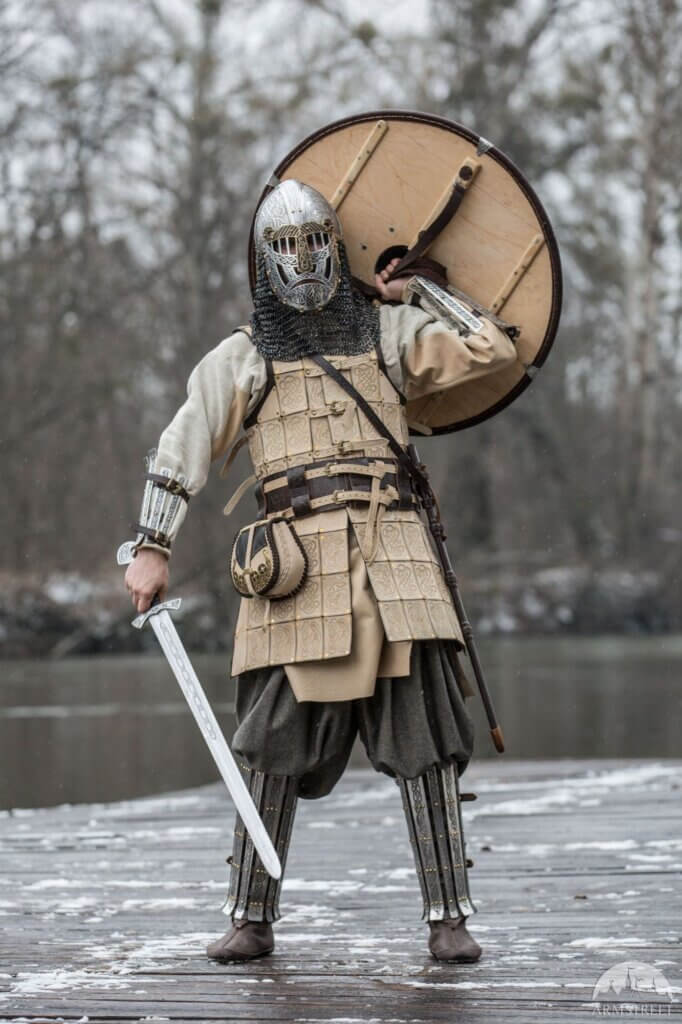
Their weapons and armour was one way Vikings showed how wealthy and important they were. Wealthy warriors usually carried a spear, a wooden shield and a sword, whilst wearing expensive mail armour. Poorer warriors used several thick layers of clothes as their armour, and may have carried a battle axe.
The only weapon all Vikings, including slaves, could carry was a knife. Most knifes were plain without any decoration, but wealthier people usually had decorations engraved on theirs.
Viking ships
The Vikings are known for their wooden ships, decorated with shields and other symbols on their sides. Battleships sometimes had a dragon-like face on the front.
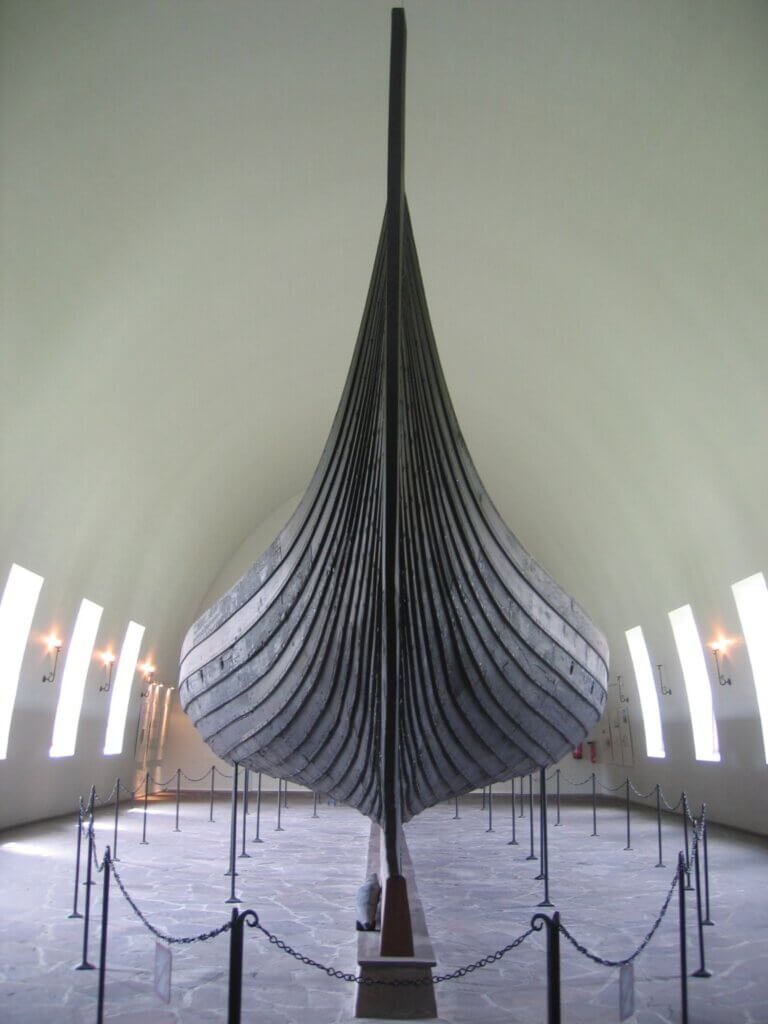
There were two types of Viking ships: the knarr and the karve.
Knarrs were wide and sturdy ships used to transport cargo, such as food and weapons. Karve ships were lighter ships that were used in wars. They could also be used in very narrow water.
Both types of ship were powered by the wind, with rowing being a backup option.
Viking class system
The Vikings had three classes: the jarls, karls and thralls.
Jarls were nobles and chiefs, and controlled most of society. Karls were free farmers and craftsmen. Thralls were the lowest class, and were slaves to jarls and karls.
Religion
Vikings followed the Old Norse religion, which has a range of gods and godesses. Each god, or deity as some called them, represented an emotion, with some gods having their own children.
They also believed in Norns, who were female spiritual beings that chose someone’s fate. Sometimes they are referred to as a group of three, but others said they were larger groups who determined the fate of newborn babies.
Afterlife
Vikings did believe in an afterlife, but unlike Christians, they didn’t think that how you behaved in life determined where you would end up.
Share this page: